Beard Transplant vs Minoxidil: Which One Actually Fixes Patchy Facial Hair? +90 554 893 6479
If you’ve searched this comparison, you’ve probably already tried — or are about to try — minoxidil, and you’re wondering whether it’s worth waiting on or whether you should just book a transplant. The honest answer depends entirely on why your beard is patchy in the first place. These two options work on genuinely different problems, and picking the wrong one wastes months (or, with surgery, more money) chasing a result it was never going to give you.
The Core Difference: Stimulating vs. Replacing
Minoxidil works on follicles that already exist but are underperforming — thin, slow-growing, or dormant. It increases blood flow to the area and can thicken and extend the growth cycle of hair that’s already there. It cannot create a follicle where none exists.
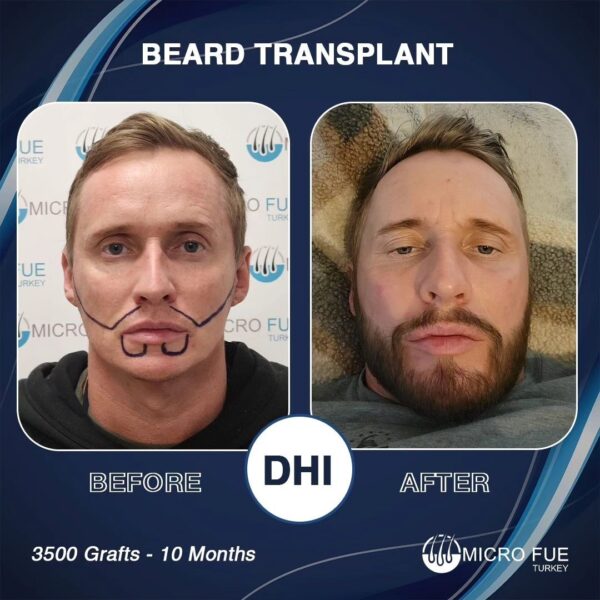
A beard transplant physically relocates functioning hair follicles (usually from the scalp) into areas with little or no facial hair. It doesn’t stimulate anything — it adds follicles that weren’t there before.
That single distinction decides which option actually applies to your case.
Comparison Table

| Factor | Minoxidil | Beard Transplant |
|---|---|---|
| How it works | Stimulates existing follicles | Relocates functioning follicles into bare areas |
| Works on truly bald patches | No | Yes |
| Time to see results | 8–16 weeks for early growth, up to 6 months for full effect | Shedding at 2–4 weeks, growth from month 2–3, final result 9–12 months |
| Commitment | Daily application, indefinitely | One procedure (occasionally a touch-up session) |
| Reversible | Yes — growth typically fades if stopped | No — transplanted follicles are permanent |
| Cost pattern | Lower upfront, ongoing recurring cost | Higher upfront, one-time cost |
| Side effects | Possible skin irritation, dryness; some report initial shedding | Standard surgical risks — redness, swelling, temporary numbness |
| Best suited for | Mild to moderate thinning with existing (if weak) follicles | Bald patches, significant patchiness, scarring, or little-to-no natural growth |
Where Minoxidil Genuinely Works
Minoxidil tends to help most when there’s already some fine or thin hair present that simply isn’t thriving — a beard that grows in but stays sparse, rather than one with truly bare skin. It’s also reasonable as a first step for younger men whose facial hair genetics may not have fully expressed yet, since it’s low-risk and reversible if it doesn’t help.
Where Minoxidil Won’t Help
If an area has no follicles at all — completely bare skin, a scar, or a patch that’s never grown hair even faintly — minoxidil has nothing to stimulate. This is the single most common reason people try it for months, see no change in specific spots, and then look into a transplant. If you already know an area is fully bare rather than just thin, you can likely skip the months of trial and go straight to a transplant consultation.
Other Non-Surgical Options Worth Knowing About
- Microneedling — small needle punctures to the skin, sometimes combined with minoxidil or serums, aimed at improving blood flow and potentially topical absorption. Evidence is more limited than for minoxidil alone, and it doesn’t create new follicles either.
- Finasteride — an oral medication that can help in some men by addressing hormonal factors in hair thinning; it carries its own set of possible side effects and requires a prescribing physician’s guidance, not self-administration.
- Dermal fillers / beard-line contouring — cosmetic, not hair-growth-based; used occasionally to visually sharpen a jawline or beard outline rather than add density. This doesn’t create hair and isn’t a substitute for either of the above.
None of these create new follicles the way a transplant does — they work within whatever follicles you already have.
Suitable Candidates for a Transplant
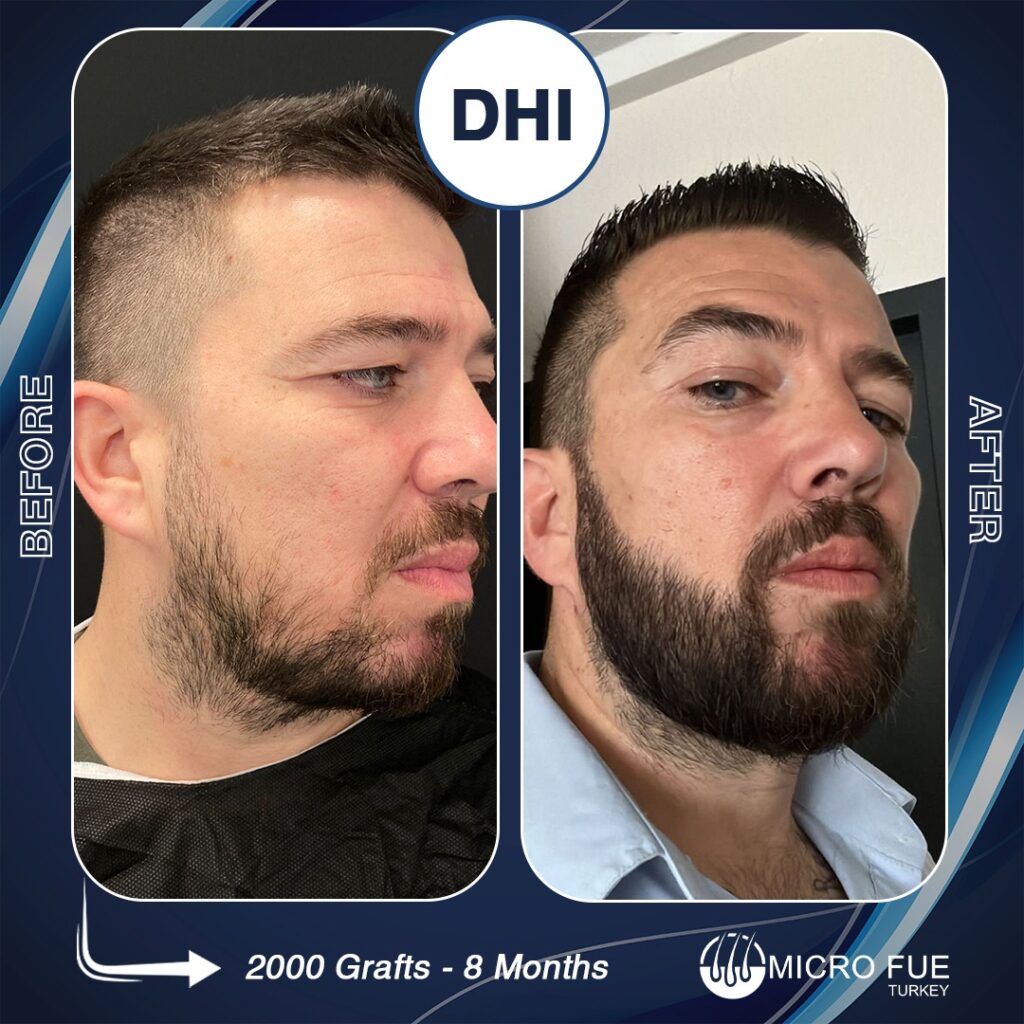
- Genuinely bare or very sparse patches with little existing follicle activity
- Scarring from acne, injury, or previous surgery
- Patients who’ve already given non-surgical options a fair trial (generally several months) without meaningful change in the bare areas specifically
- Realistic expectations about density and a willingness to go through a short recovery period
Who Should Try Non-Surgical Options First
- Thin-but-present hair rather than bare skin
- Younger patients whose genetic pattern may still be developing
- Anyone not ready for a surgical procedure who wants a lower-risk, reversible first step
Procedure Overview If You Choose a Transplant
A beard transplant relocates individual follicular units — via FUE or DHI — from a donor area (typically the back/sides of the scalp) into the bare or scarred zones, matched carefully for direction, angle, and density to blend with surrounding hair. For a full breakdown of technique, see the site’s DHI vs FUE comparison and general beard transplant guide.
Recovery Timeline (If You Go the Transplant Route)
| Stage | What to expect |
|---|---|
| Days 1–5 | Redness, mild swelling, small scabs |
| Days 7–10 | Scabs shed; avoid shaving the area |
| Weeks 2–4 | Shock loss — transplanted hairs shed; normal |
| Months 2–3 | New growth begins |
| Months 9–12 | Final density and texture largely settled |
Can You Combine Both?
Yes — many patients use minoxidil after a transplant to support and maintain density in areas with existing native hair, while relying on the transplant itself for the truly bare zones. This isn’t necessary for everyone, and it’s worth discussing with your surgeon rather than assuming it’s required.
Risks and Realistic Limitations
Minoxidil’s main risks are skin irritation and, for some, initial temporary shedding before improvement. A transplant carries standard surgical risks — infection, temporary numbness, and the possibility that density in a single session falls short of hope, sometimes requiring a touch-up. Neither option can guarantee an exact result; anyone promising a guaranteed density percentage from either approach should be treated with caution.
Cost Factors
Minoxidil is inexpensive per bottle but becomes an ongoing recurring cost for as long as you want to maintain results — stopping generally reverses the gains. A beard transplant in Turkey is a larger one-time cost but requires no ongoing purchase to maintain results once healed. Over several years, the total cost comparison often shifts in the transplant’s favor for patients who know they want a permanent change, though this depends entirely on individual circumstances.
Why Choose Turkey for a Transplant
Turkey’s high procedure volume and lower operating costs make a surgical option meaningfully more accessible price-wise than the same procedure in the UK, EU, or US — worth factoring in if you’ve concluded minoxidil alone won’t reach your bare patches.
How to Choose the Right Path
- If your patches are genuinely bare (not just thin), a transplant consultation will save you months of trial-and-error with topical treatments
- If your hair is thin but present, a supervised trial of minoxidil (with realistic 3–6 month expectations) is a reasonable lower-risk first step
- Either way, a dermatologist or transplant surgeon can assess which category your case actually falls into — don’t guess from a mirror alone
Conclusion
Minoxidil and a beard transplant aren’t really competing solutions — they solve different problems. The fastest way to stop wasting time on the wrong one is an honest assessment of whether your patches are thin or truly bare.
Not sure which category your beard falls into? Send us a photo for a free assessment — we’ll tell you honestly whether a transplant is likely to help, or whether a non-surgical option is worth trying first.
FAQs
1. Is minoxidil or a beard transplant better? Neither is universally “better” — minoxidil helps thin-but-present hair grow denser, while a transplant is the only option that adds hair to genuinely bare patches. The right choice depends on which describes your specific case.
2. Can minoxidil fill in a completely bald patch on my beard? Generally no. Minoxidil stimulates existing follicles; it can’t create hair where there’s no follicle at all.
3. How long does minoxidil take to show beard results? Early fine growth can appear within 8–16 weeks, with fuller results — if it’s going to work — typically by around 6 months.
4. What happens if I stop using minoxidil? Growth gained from minoxidil typically fades over time once you stop using it, since it doesn’t create permanent follicles.
5. Is a beard transplant permanent? Yes — transplanted follicles are generally taken from areas resistant to the factors that caused the original thinning, so results are typically long-lasting.
6. Can I use minoxidil after getting a beard transplant? Yes, some patients use it to support density in areas with existing native hair alongside the transplanted zones, though it’s not required for everyone — discuss with your surgeon.
7. Does microneedling work as well as a transplant? No — microneedling may modestly support existing hair, similar in principle to minoxidil, but it doesn’t create new follicles the way a transplant does.
8. How do I know if my patches are “thin” or truly “bare”? If you can see any fine or fuzzy hair growth in an area, however sparse, it may respond to non-surgical options. If skin is completely smooth with no hair at all, that area generally needs a transplant. A photo assessment can clarify this.
9. Is finasteride an alternative to a beard transplant? It can help some men with hormonal factors in thinning, but like minoxidil it works on existing follicles rather than creating new ones, and it requires medical supervision due to possible side effects.
10. How much does each option cost over time? Minoxidil is cheap upfront but recurring indefinitely to maintain results. A beard transplant costs more upfront but doesn’t require ongoing purchases once healed — the total cost comparison depends on your time horizon.