

 Türkçe
 Deutsch
 Русский
 Français
A personal assessment before a beard transplant in Turkey
A beard transplant moves selected hair follicles from a donor area to regions of the beard or moustache. Consultations and treatment for this service are planned in Eyüpsultan, Istanbul. The starting point is your facial features, existing hair and personal goals. Suitability, available donor resources and the proposed approach require clinical assessment.
This main service guide explains the path from an initial enquiry to follow-up. Use it to prepare questions about patchy cheeks, beard definition, moustache connections or particular gaps. Sending an enquiry does not commit you to treatment and does not establish that you are medically suitable.
In your first message, briefly describe the areas you would like to discuss and any previous procedures. Photographs can support an initial conversation but cannot replace examination. Confirm the current appointment and address with the team before arranging travel. Share relevant health information through an appropriate consultation channel rather than public website comments.
1. Explain your goals and the areas you want assessed
Start your beard transplant consultation by explaining what matters to you beyond simply wanting a fuller beard. Cheek coverage, the appearance of each side, connections to the sideburns and the jawline are different goals. Some people want to discuss a small gap; others want to explore a wider design. A specific description helps the assessment.
Your usual beard length and shaving preferences help explain your intended everyday appearance. A reference photograph may communicate an idea, but the other person’s proportions, hair characteristics and donor resources are not automatically the same as yours. The clinician should explain which expectations can be assessed and where limitations apply.
Discuss how long the sparse growth has been present and whether it has changed recently. Sudden hair loss or active skin symptoms may need investigation before cosmetic treatment is considered. An assessment may lead to a proposed procedure, postponement, a different approach or a recommendation not to have surgery.
Prepare specific questions about expectations, donor limits and follow-up with our beard transplant results consultation guide.
Before using gallery examples to describe your goals, review the source, lighting, dates and grooming with our beard transplant before and after photo checklist.
2. Assess donor hair and the graft plan together
A beard transplant does not have an unlimited supply of follicular units. The donor area’s condition, previous harvesting and potential future hair-restoration needs should be considered together. Ask how the area will be examined, where removal is proposed and what effect it may have on the donor appearance.
A graft is a follicular unit that may contain more than one hair. Graft numbers and hair numbers are therefore different measures. Establish which unit a preliminary proposal uses and which facial areas it includes. Separate an early estimate from a plan based on your individual examination.
A higher number alone does not establish a better design. Existing hair, calibre, recipient skin and the intended appearance belong in the same discussion. Ask for the assessed areas and reasons for the estimate to be recorded. This helps you compare proposals with the same scope rather than treating a larger figure as inherently better.
3. Discuss facial design alongside existing hair
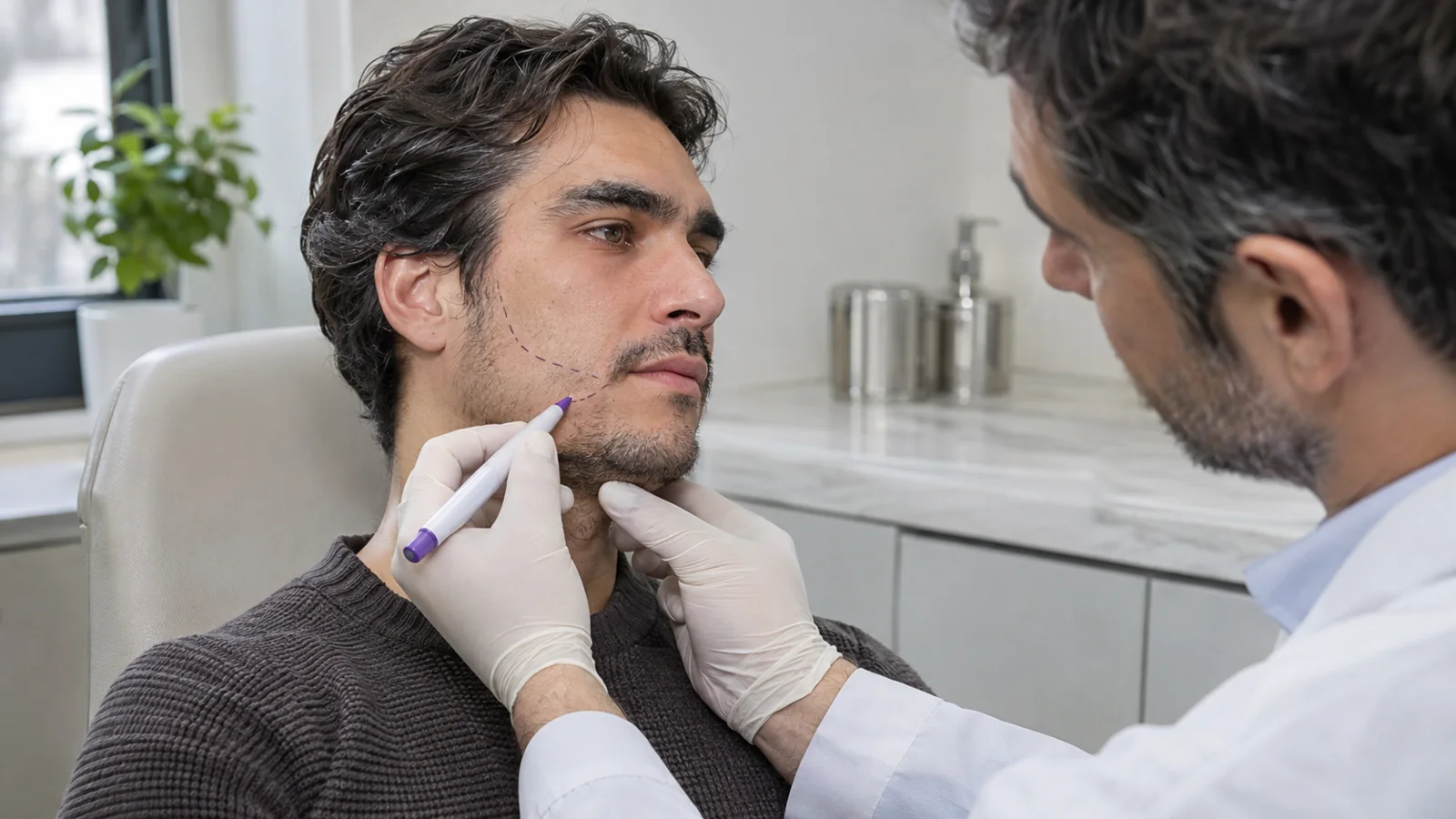
Beard transplant design involves more than the position of an outline. Hair direction, angles and transitions into existing growth should be discussed. Cheeks, moustache and chin connections have different characteristics. Explain the regions you want to change and any areas you prefer to retain as they are.
Describe the beard you intend to wear in daily life. A long beard and short stubble may raise different planning questions. Take time to discuss the outline from different views and ask about details you do not understand. A drawn line is a planning tool, not a guarantee of how growth will look.
Tell the clinician about scarring, previous acne or facial procedures. Such areas may need separate evaluation. After examination, you should understand which regions are included, which are excluded and why. If you identify another expectation later, discuss it before agreeing to the treatment plan.
4. Clarify the method, clinical responsibilities and facility
FUE concerns the removal of follicular units from the donor region, while an implanter concerns their placement. Terms including FUE and DHI may describe different stages or tools within a plan. A technique name alone does not establish superiority or suitability and does not remove surgical risks.
For a beard transplant, establish the responsible clinician’s name, relevant experience and treatment facility. Ask how examination, planning, harvesting, recipient-site preparation, placement and follow-up are organised. The role of the coordinator answering an initial enquiry should be distinguishable from the person responsible for medical decisions.
Request an explanation of why a particular approach is proposed and what alternatives exist. Discuss medical history, medicines, allergies and previous procedures. Do not stop or change prescribed medication because of a general internet guide. Where changes are needed, these should be discussed with the treating clinician and the professional who prescribed it.
For a structured list of consultation questions, read our DHI vs FUE beard transplant comparison. It separates harvesting from placement and helps you compare the documented plans behind different technique labels.
5. Review the written quotation and included services
Request a current itemised quotation based on your assessment. Establish whether consultation, treatment, any required investigations, care products and review appointments are included. The quotation’s validity, payment terms and the process for agreeing changes should also be clear before you make a commitment. For the questions behind a personal quotation, read what affects beard transplant cost.
If accommodation or transfers are offered, read their scope separately. Room type, nights included, transfer routes and arrangements for a companion are logistical services. A package name does not establish that every possible cost is covered. Ask for excluded items and optional charges to be identified in writing. For a structured booking checklist, review beard transplant packages before confirming the arrangements.
When comparing beard transplant proposals, make sure they concern the same facial regions and comparable follow-up. The lowest price or largest graft number is not enough to judge suitability. Consider the clinical explanation, whether the plan is understandable and who will be available if questions or concerns arise.
6. Arrange your Istanbul visit around the clinical plan
Confirm the current address, appointment time and preparation requested by the team. Travel time to Eyüpsultan depends on your starting point and traffic conditions. Do not organise the whole visit around an assumed journey time. Leave flexibility for the appointment and any additional assessment or review that may be needed.
Travel, returning to work, shaving and exercise after a beard transplant should follow your individual instructions. There is no calendar that applies identically to every person. Your return journey and accommodation should allow necessary reviews. Establish whom to contact if your health or the proposed arrangements change.
If someone accompanies you, discuss their role and accommodation beforehand. Keep travel organisation separate from medical suitability: an available flight does not establish that you can be treated on that date. Ask what happens to the arrangements if the examination leads to a different recommendation.
7. Obtain a written care and follow-up plan
A beard transplant is surgery. Risks such as bleeding, infection, scarring, reactions to anaesthesia and growth that differs from expectations should be discussed individually. Ask which risks may be particularly relevant to you and how they are managed. No specific density, completely scar-free result or identical appearance for everyone should be promised.
Request personal instructions about washing, touching the area, shaving, products and everyday activities. A general guide cannot replace the treating team’s written aftercare. New medicines or products, particularly on healing skin, should be discussed with the responsible professional rather than started independently.
Establish when reviews will take place, when a remote conversation will not be sufficient and how unexpected symptoms will be assessed. Healing and growth are evaluated over time. If you have an urgent health problem, seek medical help where you are instead of waiting for a routine message reply.
A practical example for comparing two proposals
Imagine that the first consultation covered gaps on the cheeks, while the second also included moustache and chin connections. Different graft estimates or prices may reflect different treatment areas. First ask for the same regions to be assessed, then compare donor evaluation, procedure scope and follow-up. Understanding the reason for a difference is more useful than automatically choosing the bigger figure.
If a quotation includes reviews, ask when, by whom and under what conditions they are provided. How will a new concern be assessed after you leave the city? What are the limits of a photograph-based check, and how would a necessary in-person examination be arranged? These details affect how the plan works in practice.
Keep the date of the proposal, named clinician, included regions, provisional assumptions, exclusions and unanswered questions together. That makes conflicting messages easier to identify. Ask for clarification before payment or consent. Your current individual written plan should take precedence over an internet article.
Prepare useful notes and agree the next step
Bring a short record of your priority areas, beard habits, earlier procedures and questions. Add the clinician’s explanation to the same notes. Mark whether an estimate remains preliminary, what examination is still needed and who takes responsibility for follow-up. This makes later questions more specific.
Before deciding, explain the proposal back in your own words. If you cannot describe the scope, reasons, costs or next step, request further information. You do not have to decide immediately after a consultation. Allow time to resolve uncertainties or seek another professional opinion when appropriate.
A further examination, additional information or time to consider your options may be recommended. Establish what is needed, why and whom to contact. Tell the team about changes in your health or medicines after the first consultation. Keep updated appointment and care information available rather than relying on an older message.
Frequently asked questions about the service
Is everyone suitable for a beard transplant? No. The donor area, health history, skin, existing hair and expectations need assessment. Consultation and any necessary examination determine personal suitability.
Is the graft number final after the first message? An initial figure may be preliminary. Examination of facial regions and donor resources clarifies the individual scope.
Are FUE and DHI completely separate choices? Harvesting and placement are different stages. Ask which approach is proposed for each and why.
Where does treatment take place? This service is planned in Eyüpsultan, Istanbul. Confirm the current full address and appointment details before travelling.
Why can quotations differ? Treatment scope, individual assessment and included services may vary. Request a current written breakdown.
Can a photograph confirm my procedure booking? It can support an initial discussion, but necessary clinical assessment and final planning still need to take place.
When can the result be assessed? Healing and growth vary. Follow the review plan rather than relying on a guaranteed day or month.
How do I request a consultation? Use the contact page or the existing WhatsApp number below. Briefly explain which areas you would like to discuss.
Related service information and consultation
If you are seeking assessment after an earlier procedure, our corrective beard transplant consultation guide covers previous records, donor limitations, the proposed revision plan and follow-up. An additional procedure should follow an individual assessment.
Home · FUE beard transplant · Frequently asked questions · Contact · Graft planning.
Independent patient information: ISHRS · NHS.
Message on WhatsApp · +90 554 893 64 79.
Further practical reading: planning your consultation · aftercare questions · travel arrangements · comparing written costs.
If your main concern is the upper lip, explore our mustache transplant in Turkey guide for seven questions about design, donor assessment, risks, costs and follow-up.