BEARD TRANSPLANT IN TAKSIM
Beard transplant in Taksim has positioned this central Istanbul district as one of the leading destinations for facial hair restoration worldwide. Men from the United Kingdom, United States, Germany, Australia, and the Middle East travel to Taksim every year to address patchy beards, scarring, or complete lack of facial hair growth. The combination of experienced surgeons, competitive pricing, and world-class medical facilities has made Taksim a preferred choice over Western clinics charging three to four times more for the same procedure.
This comprehensive guide covers everything you need to know about getting a beard transplant in Taksim, from the techniques used and expected costs to the step-by-step process and realistic recovery timeline.
WHY CHOOSE TAKSIM FOR YOUR BEARD TRANSPLANT
Taksim sits at the heart of Istanbul’s European side, offering unmatched convenience for medical tourists. The district hosts numerous internationally accredited clinics staffed by surgeons who have performed thousands of beard transplant procedures. This concentration of expertise creates healthy competition that benefits patients through better services and transparent pricing.
EXPERIENCED SURGEONS SPECIALIZING IN FACIAL HAIR
Beard transplantation requires different skills than scalp hair restoration. The facial hair must follow specific angles and directions that vary across the cheeks, chin, mustache, and sideburn areas. Surgeons in Taksim have developed specialized expertise in facial hair aesthetics through years of dedicated practice. Many hold memberships in international hair restoration societies and regularly attend conferences to stay current with the latest techniques.
INTERNATIONALLY ACCREDITED FACILITIES
Leading clinics in Taksim hold accreditations from the Joint Commission International and Turkish Ministry of Health. These certifications ensure adherence to strict hygiene protocols, proper sterilization procedures, and qualified medical staff. Patients can verify clinic accreditations before booking their procedure to ensure they receive care meeting international standards.
CENTRAL LOCATION WITH EXCELLENT AMENITIES
Unlike clinics located in distant suburbs, Taksim clinics sit within walking distance of hotels, restaurants, pharmacies, and public transportation. Patients can rest comfortably at nearby accommodations and attend follow-up appointments without lengthy commutes. The vibrant atmosphere also provides pleasant distractions during the recovery period.
BEARD TRANSPLANT COST IN TAKSIM
Beard transplant in Taksim typically costs between 1,500 and 3,500 euros depending on the number of grafts required, the technique selected, and the clinic’s reputation. This pricing represents significant savings compared to the United Kingdom where the same procedure ranges from 6,000 to 12,000 pounds, or the United States where costs reach 7,000 to 15,000 dollars.
WHAT IS INCLUDED IN THE PRICE
Most Taksim clinics offer all-inclusive packages that cover the complete treatment journey. Standard inclusions are the surgical procedure itself, local anesthesia administration, pre-operative blood tests and medical evaluation, post-operative medications including antibiotics and pain relief, PRP treatment to enhance graft survival, and all follow-up consultations during your stay.
Premium packages often add airport transfers, hotel accommodation for two to four nights, a dedicated translator or patient coordinator, and a grooming kit with specialized shampoos and lotions for aftercare.
FACTORS AFFECTING BEARD TRANSPLANT PRICE
The final cost depends primarily on the number of grafts needed. A patient requiring 800 grafts for goatee enhancement pays less than someone seeking 3,000 grafts for complete beard coverage. The chosen technique also matters, with DHI typically costing more than standard FUE due to the specialized implanter pens used.
Surgeon experience level influences pricing as well. Clinics led by internationally recognized specialists with extensive portfolios may charge premium rates, though this often correlates with superior results and lower complication rates.
HOW MANY GRAFTS FOR BEARD TRANSPLANT
Graft requirements vary dramatically based on the coverage area and desired density. During your consultation in Taksim, the surgeon will assess your facial structure and existing hair to provide an exact count. The following ranges serve as general guidelines.
GRAFT COUNTS BY BEARD AREA
Mustache restoration alone requires 150 to 450 grafts depending on desired thickness. The mustache area demands precise placement as hairs must angle downward and follow the natural growth pattern above the lip.
Goatee coverage typically needs 300 to 700 grafts. This includes the chin and the area immediately below the lower lip. Patients wanting a fuller goatee with extended coverage require grafts toward the higher end of this range.
Sideburns need 200 to 400 grafts per side. The grafts must transition naturally from scalp hair to facial hair, requiring careful attention to density gradation.
Full cheek coverage represents the largest area, requiring 600 to 1,200 grafts per side. Cheek beard hair grows at specific angles that create the characteristic whorl pattern, and experienced surgeons replicate this precisely.
Complete full beard reconstruction for patients with little to no facial hair requires 2,500 to 4,000 grafts total. This covers the mustache, cheeks, chin, jawline, and sideburns with sufficient density to achieve a masculine, natural appearance.
DONOR AREA CONSIDERATIONS
All grafts come from the donor area at the back and sides of the scalp. This hair is genetically resistant to loss and maintains these characteristics when transplanted to the face. The surgeon must evaluate whether your donor area can supply the required grafts without causing visible thinning.
Patients with limited donor supply may need to adjust their expectations or consider beard designs that require fewer grafts while still achieving significant improvement.
BEARD TRANSPLANT TECHNIQUES IN TAKSIM
Taksim clinics offer multiple beard transplant techniques, each with specific advantages. Your surgeon will recommend the most suitable method based on your goals, graft requirements, and individual characteristics.
FUE BEARD TRANSPLANT
Follicular Unit Extraction remains the most popular technique for beard transplants in Taksim. The surgeon uses a micro punch tool measuring 0.6 to 0.9 millimeters in diameter to extract individual follicular units from the donor area. Each unit contains one to four hairs.
FUE leaves no linear scar, only tiny dot marks that become virtually invisible once the surrounding hair grows. Recovery time is shorter compared to older techniques, and patients experience less discomfort. The extracted grafts are then implanted into small incisions created in the beard area at angles matching natural facial hair growth.
DHI BEARD TRANSPLANT
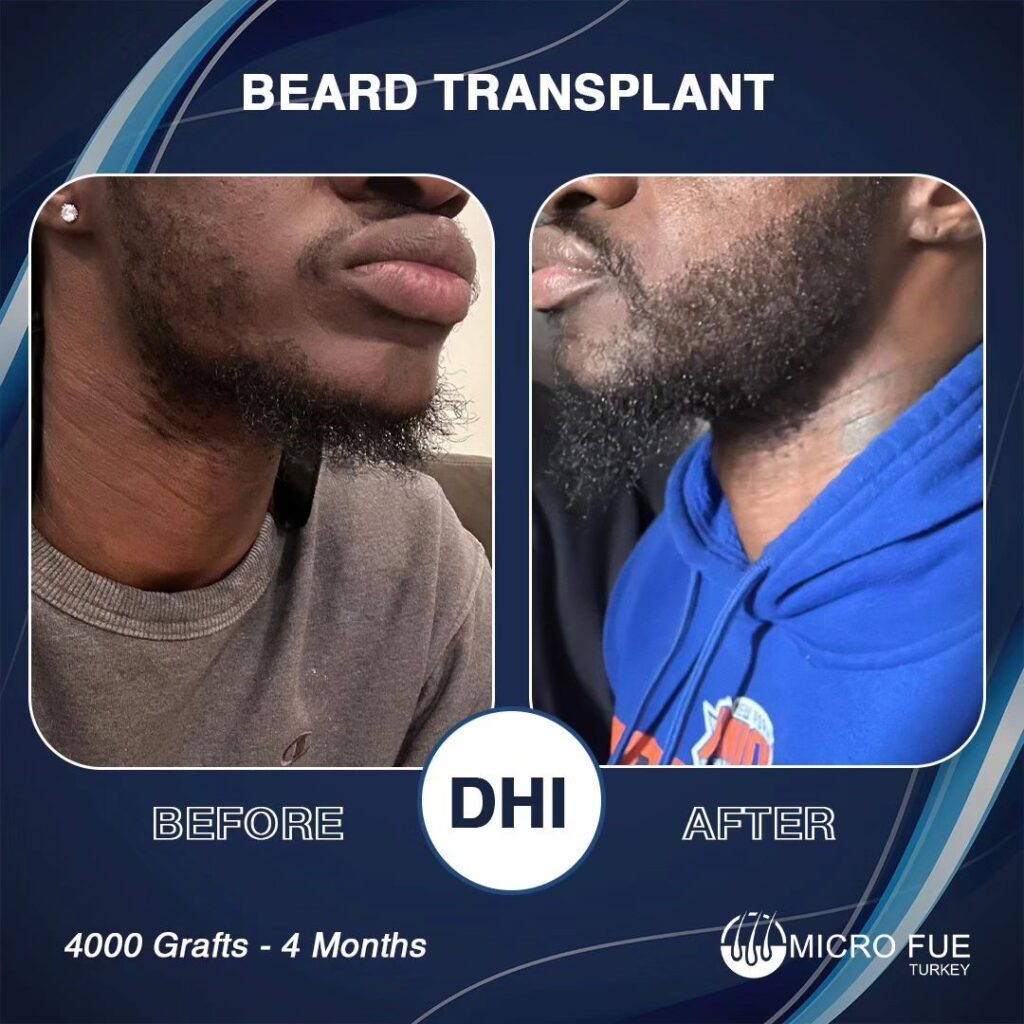
Direct Hair Implantation uses a specialized pen-shaped device called a Choi implanter. This tool allows the surgeon to create the recipient site and implant the graft in a single motion, reducing the time grafts spend outside the body and potentially improving survival rates.
DHI offers greater precision in controlling implantation depth and angle, which proves particularly valuable for beard work where natural appearance depends heavily on proper hair direction. The technique also causes less trauma to existing facial hair, making it suitable for patients seeking to fill gaps rather than create an entirely new beard.
SAPPHIRE FUE BEARD TRANSPLANT
This advanced variation of FUE uses blades made from sapphire crystal rather than steel to create recipient sites. Sapphire blades allow for smaller, more precise incisions that heal faster and cause less tissue trauma. Many Taksim clinics now offer Sapphire FUE as their standard technique or as an upgrade option.
The smoother incision edges created by sapphire blades may result in denser packing of grafts and reduced scabbing during recovery. Patients often report less swelling and faster return to normal appearance with this technique.
BEARD TRANSPLANT PROCEDURE STEP BY STEP
Understanding the complete process helps patients prepare mentally and practically for their beard transplant in Taksim.
INITIAL CONSULTATION AND ASSESSMENT
The journey begins with a detailed consultation, either online before traveling or in person upon arrival in Taksim. The surgeon examines your facial structure, evaluates the donor area, and discusses your goals. Photographs are taken and often used with imaging software to preview potential results.
The doctor explains which technique suits your situation, calculates the graft count needed, and provides a detailed cost breakdown. This is your opportunity to ask questions, view before-and-after photos of previous patients, and ensure you feel confident proceeding.
PRE-OPERATIVE PREPARATION
Before surgery day, patients receive instructions to follow for optimal results. You must stop smoking at least one week before the procedure, as nicotine impairs blood flow and graft survival. Alcohol should be avoided for several days prior. Blood-thinning medications and supplements like aspirin, vitamin E, and fish oil must be discontinued to reduce bleeding risk.
On the morning of surgery, eat a light breakfast and wear comfortable, button-front clothing that won’t need to be pulled over your head after the procedure.
SURGERY DAY PROCESS
Patients arrive at the clinic in the morning. The team reviews paperwork and conducts final blood tests if not completed previously. The surgeon marks the beard design on your face using a special pen, and you approve the planned shape and density before proceeding.
Local anesthesia is administered to both the donor area and face. Modern clinics use needle-free injection systems or very fine needles to minimize discomfort. Once numbness takes effect, you feel no pain during the procedure.
Extraction begins with the surgeon harvesting follicular units one by one from the donor area. Depending on graft count, this phase takes two to four hours. The extracted grafts are stored in a specialized solution that keeps them viable.
After a break for lunch, the implantation phase begins. The surgeon creates tiny incisions in the beard area following the predetermined design, then places each graft into position. This phase requires intense precision and typically takes two to five hours.
Throughout the procedure, patients remain awake and can watch television, listen to music, or simply rest. The clinical team monitors comfort levels and can administer additional anesthesia if needed.
IMMEDIATE POST-OPERATIVE CARE
Once implantation is complete, the team cleans the treated areas and applies any necessary dressings. You receive detailed written instructions for aftercare plus a kit containing medications and specialized products.
The clinic arranges transportation back to your hotel. Rest is recommended for the remainder of the day, sleeping with your head elevated to minimize swelling.
BEARD TRANSPLANT RECOVERY TIMELINE
Recovery from beard transplant in Taksim follows a predictable pattern, though individual experiences vary slightly.
FIRST THREE DAYS
Swelling appears around the forehead and eyes, peaking on day two or three. This occurs because fluids from anesthesia migrate downward due to gravity. The swelling looks worse than it feels and resolves within a week. Some patients use cold compresses on the forehead to reduce puffiness.
Small scabs form around each transplanted graft. These protect the healing follicles and must not be picked or scratched. Redness in the transplanted area is normal and expected.
DAYS FOUR TO SEVEN
Most patients can return to non-strenuous work and light activities. Swelling subsides significantly. Gentle washing of the beard area begins, following specific instructions from your clinic. Many patients return home during this period, though follow-up consultations via video call continue.
WEEKS TWO TO FOUR
Scabs fall off naturally, revealing the transplanted hairs beneath. Around week two to three, the transplanted hairs enter a shedding phase. This shock loss alarms many patients but is completely normal. The hair follicles remain alive beneath the skin even as the visible hair shafts fall out.
MONTHS TWO TO FOUR
The dormant follicles begin producing new growth. Initially the hairs appear fine and sparse. Patience is essential during this phase as growth accelerates gradually.
MONTHS SIX TO TWELVE
By month six, most patients see substantial growth and can begin shaping their beard. Full final results appear between nine and twelve months when the transplanted hair reaches its mature thickness and density. At this point the beard hair behaves exactly like natural facial hair and can be trimmed, shaved, or styled freely.
WHO IS A GOOD CANDIDATE FOR BEARD TRANSPLANT
Not everyone qualifies for beard transplant surgery. Understanding candidacy requirements helps set realistic expectations.
IDEAL CANDIDATES
Good candidates for beard transplant in Taksim include men with genetic inability to grow full facial hair, experiencing patchy or uneven beard growth despite adequate testosterone levels. Those with facial scarring from acne, burns, injuries, or previous surgeries often seek beard transplant to camouflage damaged skin.
Transgender patients undergoing female-to-male transition frequently choose beard transplant as part of their masculinization process. The procedure helps create facial features aligning with their gender identity.
Men who simply desire a different beard style than their genetics allow, such as a fuller goatee or connected sideburns, also make good candidates.
REQUIREMENTS FOR CANDIDACY
All candidates must have adequate donor hair on the back and sides of the scalp. The donor area must provide sufficient grafts without resulting in noticeable thinning. Patients with advanced scalp hair loss may have limited donor supply.
Good overall health is essential. Patients with uncontrolled diabetes, bleeding disorders, or active skin conditions on the face may need medical clearance or treatment before proceeding. Those taking blood thinners require coordination with their prescribing physician.
Realistic expectations matter significantly. Beard transplant can dramatically improve facial hair, but cannot create unlimited density from limited donor supply. The surgeon must honestly communicate what results are achievable.
RISKS AND POTENTIAL COMPLICATIONS
Beard transplant is a safe procedure when performed by qualified surgeons in proper facilities, but patients should understand potential risks.
COMMON TEMPORARY EFFECTS
Nearly all patients experience swelling, redness, and mild discomfort in the days following surgery. Itching during the healing phase is common and managed with prescribed medications. Temporary numbness in the donor or recipient area resolves within weeks to months as nerves regenerate.
LESS COMMON COMPLICATIONS
Infection occurs rarely when proper hygiene protocols are followed and patients adhere to aftercare instructions. Signs include increasing redness, warmth, pus, or fever, and require immediate medical attention. Antibiotics resolve most infections quickly.
Folliculitis, an inflammation of hair follicles, may develop during the growth phase. This appears as small pimples around the transplanted hairs and responds well to topical or oral treatments.
Poor graft survival can result from smoking, improper aftercare, or underlying health conditions. Following all pre and post-operative instructions maximizes the chance of excellent graft survival.
Unnatural appearance results from poor surgical technique, emphasizing the importance of choosing an experienced, specialized surgeon. When grafts are implanted at wrong angles or improper density, the beard looks artificial. This risk decreases dramatically when selecting surgeons with extensive beard transplant portfolios.
PREPARING FOR YOUR BEARD TRANSPLANT IN TAKSIM
Proper preparation ensures a smooth experience and optimal results.
BEFORE TRAVELING TO ISTANBUL
Research clinics thoroughly and schedule online consultations with your top choices. Verify surgeon credentials, request before-and-after photos specifically of beard transplant patients, and read reviews on independent platforms. Confirm all costs in writing including what is and is not included.
Arrange time off work, typically five to seven days minimum though two weeks is ideal. Book accommodation near your chosen clinic in Taksim for convenience during recovery.
MEDICAL PREPARATION
Stop smoking at least one week before surgery, ideally two weeks. Discontinue alcohol three to five days prior. Inform your surgeon of all medications and supplements you take. Stop blood thinners only with your prescribing doctor’s approval.
If you have any chronic health conditions, obtain clearance from your regular physician and share relevant medical records with your Taksim clinic.
WHAT TO BRING
Pack button-front shirts to avoid pulling clothing over your head post-surgery. Bring a travel pillow for sleeping elevated. Sunglasses help conceal swelling when venturing out during recovery. Ensure you have all necessary chargers and entertainment for rest periods.
FREQUENTLY ASKED QUESTIONS
IS BEARD TRANSPLANT PERMANENT?
Yes, beard transplant provides permanent results. The transplanted hair follicles are harvested from the donor area at the back of the scalp, which is genetically programmed to resist hair loss. These follicles retain their characteristics when moved to the face, continuing to produce hair for a lifetime. Once fully grown, the transplanted beard hair can be shaved, trimmed, and styled normally, and it will continue growing back just like natural facial hair.
HOW LONG DOES A BEARD TRANSPLANT PROCEDURE TAKE?
A beard transplant in Taksim typically takes between four and eight hours depending on the number of grafts required. Smaller procedures addressing just the mustache or filling minor patches may finish in four hours. Complete full beard reconstruction requiring several thousand grafts needs seven to eight hours. Patients remain comfortable throughout under local anesthesia, with breaks for lunch and rest as needed.
WHEN CAN I SHAVE AFTER BEARD TRANSPLANT?
Patients must wait at least ten days before carefully trimming the transplanted area with scissors. Electric trimmer use is permitted after three to four weeks once initial healing completes. Traditional razor shaving should wait until six to eight weeks post-procedure when the grafts are fully secure and stable. Your surgeon provides personalized guidance based on your healing progress.
DOES BEARD TRANSPLANT HURT?
The procedure itself is painless due to local anesthesia. The most uncomfortable moment is the initial anesthetic injections, which modern clinics minimize using needle-free devices or very fine needles. Once numbness takes effect, patients feel only light pressure and touching sensations. Post-operative discomfort is generally mild, described as tightness or tenderness rather than significant pain, and is well controlled with standard pain medications.
WILL MY BEARD TRANSPLANT LOOK NATURAL?
When performed by an experienced surgeon specializing in facial hair restoration, beard transplant results look completely natural. The key factors are proper graft placement matching the natural direction and angle of facial hair growth, appropriate density that suits your face shape, and careful design of the beard outline. Skilled surgeons in Taksim have extensive experience creating natural-looking beards tailored to each patient’s facial structure and aesthetic preferences.
CAN I COMBINE BEARD TRANSPLANT WITH HAIR TRANSPLANT?
Yes, many patients choose to address both scalp and beard hair restoration during the same trip to Taksim. Combining procedures maximizes efficiency and reduces total cost compared to two separate treatments. The surgeon evaluates whether your donor area can supply sufficient grafts for both areas. In some cases, procedures may be performed on the same day or split across consecutive days depending on the total graft count required.
HOW DO I CHOOSE THE RIGHT CLINIC IN TAKSIM?
Select a clinic based on surgeon specialization and experience rather than price alone. Verify the primary surgeon holds credentials in hair restoration and ask specifically how many beard transplants they have performed. Request to see an extensive portfolio of beard transplant results including patients with similar goals to yours. Read reviews on independent platforms rather than only clinic websites. Confirm accreditations and ensure clear communication about all costs and included services.
BOOK YOUR FREE CONSULTATION
Taking the first step toward a fuller beard begins with a personalized consultation. Our recommended partner clinics in Taksim offer complimentary assessments where experienced surgeons evaluate your facial hair goals, examine your donor area, and provide honest recommendations about achievable results.
Complete the consultation request form to receive detailed information from top-rated Taksim clinics. Their multilingual patient coordinators will contact you promptly to answer questions and guide you through the process. As a special offer for visitors to our site, you receive a 5 percent discount on your beard transplant procedure when booking through this form.
Transform your appearance with a natural, full beard crafted by specialists in Istanbul’s premier medical tourism district.